
Before Magnolia: Indigenous History Along the Ashley River
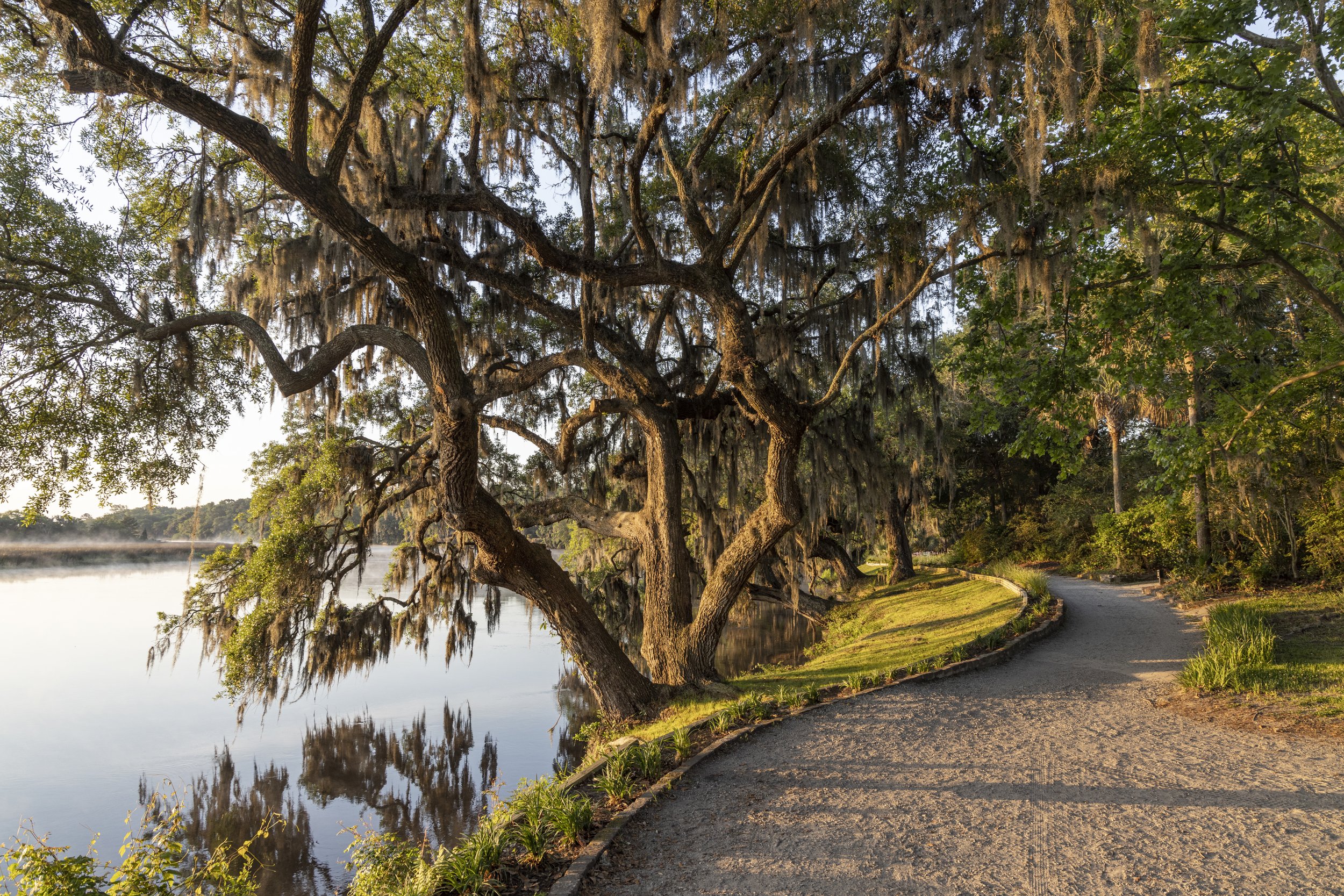
When visitors walk through Magnolia Plantation & Gardens today, they encounter a landscape shaped by centuries of human history. The gardens, Ashley River, ancient live oaks, and surrounding Lowcountry terrain can make it easy to think of this place primarily through the lens of the plantation era but Magnolia’s story began long before.
The Cusabo Peoples and the Ashley River Basin
Prior to European contact, native communities collectively known as the Cusabo—including the Kiawah, Kussoe, Stono, and neighboring groups—lived, hunted, fished, and traded throughout the Lowcountry. For these nations, the Ashley River and surrounding waterways were vital routes for travel, regional trade, and intertribal diplomacy. Their seasonal ways of life were intimately tied to the natural rhythms of the coastal environment, utilizing sustainable practices to thrive along the tidal marshlands.
By the time English settelers arrived in the 1670s, Indigenous knowledge of the local ecology proved essential to the newcomers' survival. Early interactions involved trade networks, diplomacy, and strategic alliances. However, as colonial expansion accelerated, competition over land and resources intensified. Through forced displacement, introduced diseases, warfare, and land cessions during the late seventeenth century, native populations along the Ashley River corridor were systematically pushed from their ancestral homelands, paving the way for the development of the plantation system.
Preserving Native Heritage in the Lowcountry Today
Although displacement drastically altered the region, the Indigenous history of Magnolia was never erased. Archaeological sites across the property continue to reveal physical evidence of early settlement, including ancient pottery fragments, stone tools, and preserved trade artifacts. Furthermore, native place names and river paths remain enduring markers of this ancient presence throughout coastal South Carolina.
On Indigenous Peoples’ Day, October 12th, 2026, we recognize that Magnolia’s story began long before the plantation era and honor the Indigenous peoples whose lives, knowledge, and connections to this land shaped what we know today. Recognizing this history gives us a fuller understanding of the place we steward. As we continue to learn, research, and listen to Indigenous perspectives, our work remains focused on more fully interpreting the people and communities who lived here long before Magnolia became part of its story.
