
South Carolina’s colonial history is deeply intertwined with the crops that shaped the Lowcountry landscape, and none carries a richer legacy than indigo. Revered across the globe for producing a deep, vibrant blue dye, indigo grew into one of the most lucrative cash crops of the 18th century.
However, the complete history of South Carolina indigo extends far beyond a single breakthrough or individual. It is a story of transatlantic agricultural knowledge, labor, and innovation.
Eliza Lucas Pinckney and 18th-Century Indigo Cultivation
In standard historical accounts, Eliza Lucas Pinckney is widely credited with establishing indigo as a major commercial export in South Carolina during the 1740s. Her agricultural trials demonstrated the plant’s viability in Lowcountry soil and motivated neighboring planters to invest in its cultivation.
Yet Pinckney did not build the industry single-handedly. Independent planters, colonial botanists, and seasoned dyemakers throughout the region were actively testing seeds, soil conditions, and fermentation methods. Together, their collective experiments turned indigo into a cornerstone of South Carolina’s colonial economy.
The People Behind the Blue
Behind every batch of indigo dye was a tremendous amount of knowledge, skill, and labor. Enslaved Africans and African Americans played an essential role in the cultivation, harvesting, and processing of indigo. Their agricultural expertise and practical knowledge helped transform the plant into a valuable blue dye for international
markets.
Understanding this history means recognizing the many people whose contributions made the indigo industry possible, including those whose names and stories were rarely recorded. Indigo’s legacy is therefore about more than agriculture or commerce. It also reflects the experiences of enslaved people, the development of traditional dye-making techniques, and the complex history of the Lowcountry.
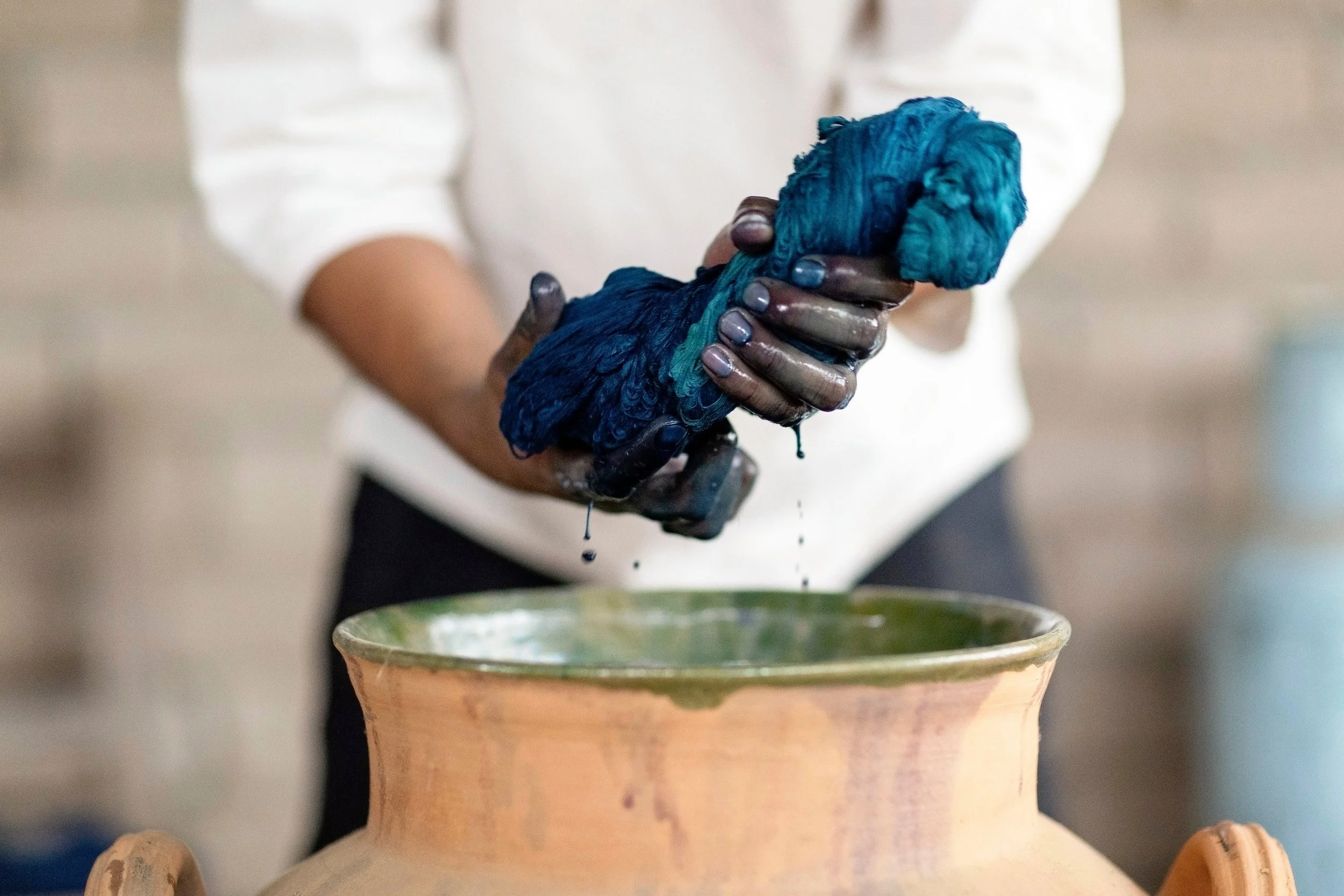

Experience the History: "Journey to Indigo" at Magnolia Plantation & Gardens
Indigo’s legacy is more than an agricultural milestone; it reflects the resilience, cultural traditions, and complex human stories of the Lowcountry.
Through the Journey to Indigo program, Magnolia Plantation & Gardens invites visitors to explore the multifaceted history of this storied plant. By examining historical records alongside cultural traditions, this program moves beyond conventional narratives to honor all the people who shaped South Carolina’s past.
The next time you see that rich, unmistakable Lowcountry blue, remember the generations of knowledge and labor woven into its fibers.
Plan your visit to Magnolia Plantation & Gardens today to experience Journey to Indigo and uncover the living history of the Charleston Lowcountry.
